


Clinical Supervision for Dietitians
For dietitians ready to fill the gaps left by traditional training
Do you ever feel stuck when nutrition education isn’t enough to create change with your clients?
Many dietitians enter practice with a strong grasp of nutrition science, yet feel underprepared for the complexity that shows up in real client work.
Eating disorders rarely exist in isolation, and sessions are often shaped by trauma histories, neurodivergence, or dissociative processes that aren’t addressed in traditional training.
Supervision at Second Breakfast offers a space to slow down, expand your clinical lens, and develop skills that support both nutritional care and nervous system safety.

What is supervision for dietitians?
Eating disorder and private practice dietitians often work in close, relational ways with clients, and that work naturally brings up transference, countertransference, and emotional complexity.
These dynamics are not something most dietitians leave their internship feeling confident navigating on their own. In private practice especially, the work can become isolating without space to reflect, process, and receive clinical support.
Supervision offers dietitians a place to think critically about their work, receive guidance, and stay grounded in both ethical and attuned care. This support benefits clients, and it also helps sustain the clinician doing the work.
-
Supervision at Second Breakfast Nutrition is rooted in shared values and real clinical experience that go beyond what most dietitians are taught in school or internship.
All of our supervisors work from a weight-inclusive, non-diet, and trauma-informed lens, and intentionally integrate somatic and nervous system–aware approaches into their work. Each supervisor has completed Level 2 training through the Embodied Recovery Institute, which gives us a shared foundation and language while still leaving room for individual style and expertise.
Alongside that common framework, every supervising dietitian brings their own clinical interests and niche, which you can learn more about in their individual bios. The result is supervision that feels consistent, grounded, and still tailored to what you need.
-
Supervision is shaped by your clinical work and the questions that arise in session.
Supervision may include support with:
Navigating transference and countertransference in sessions
Working with eating disorders alongside trauma and nervous system responses
Understanding how somatic and bottom-up approaches apply to nutrition care
Processing clinical overwhelm or uncertainty
Strengthening confidence in complex or nuanced cases
Reflecting on boundaries, pacing, and therapeutic alliance within dietetic scope
The goal is not to “fix” sessions, but to deepen understanding and expand clinical flexibility.
-
Supervision at SBN is collaborative, reflective, and grounded in real clinical experiences. Rather than relying on rigid protocols or prescriptive advice, supervision emphasizes curiosity, attunement, and thoughtful decision-making within dietetic scope. Sessions are designed to support both client care and clinician sustainability, offering space to slow down, process complexity, and integrate new perspectives into your work. The tone is supportive, honest, and development-focused rather than evaluative.
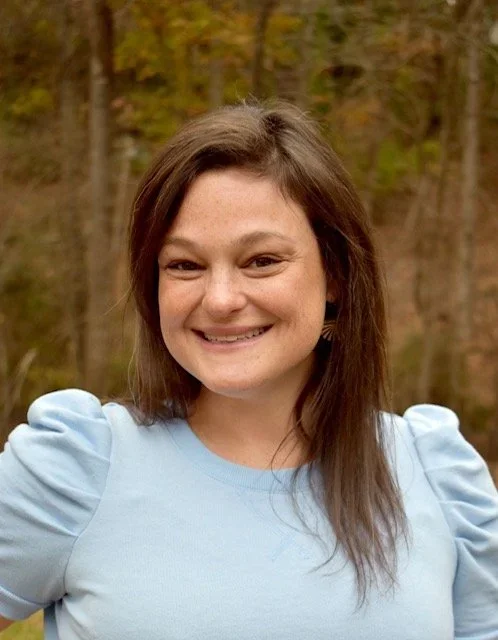
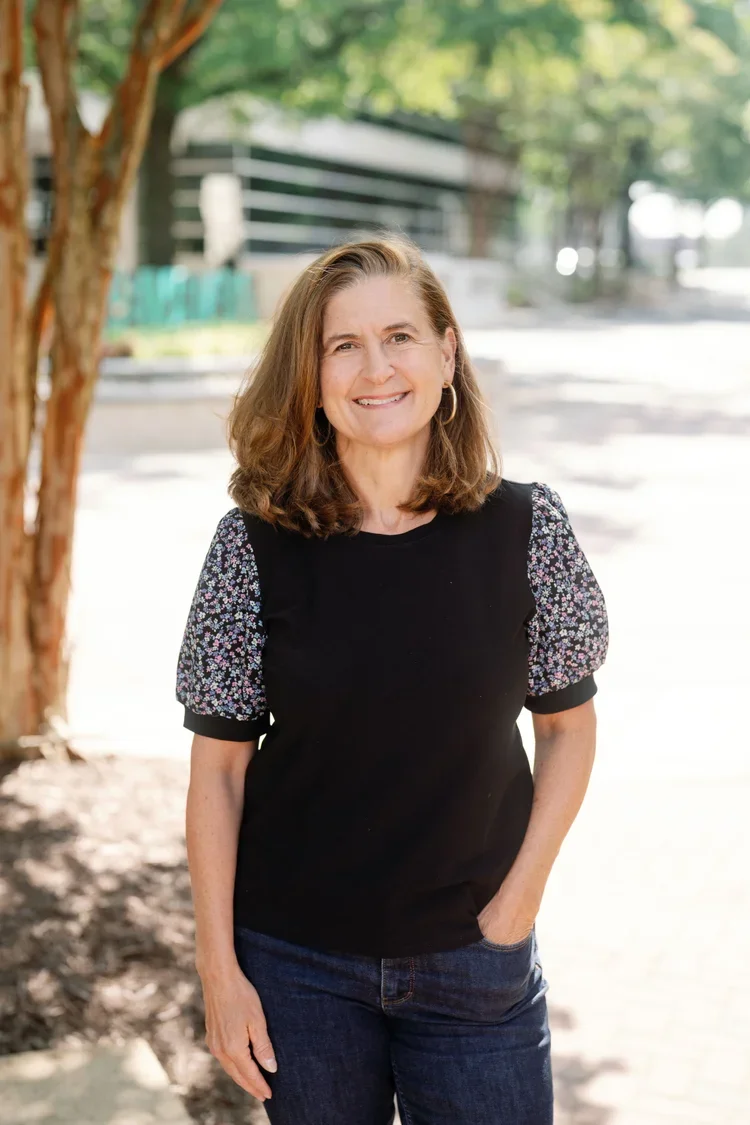
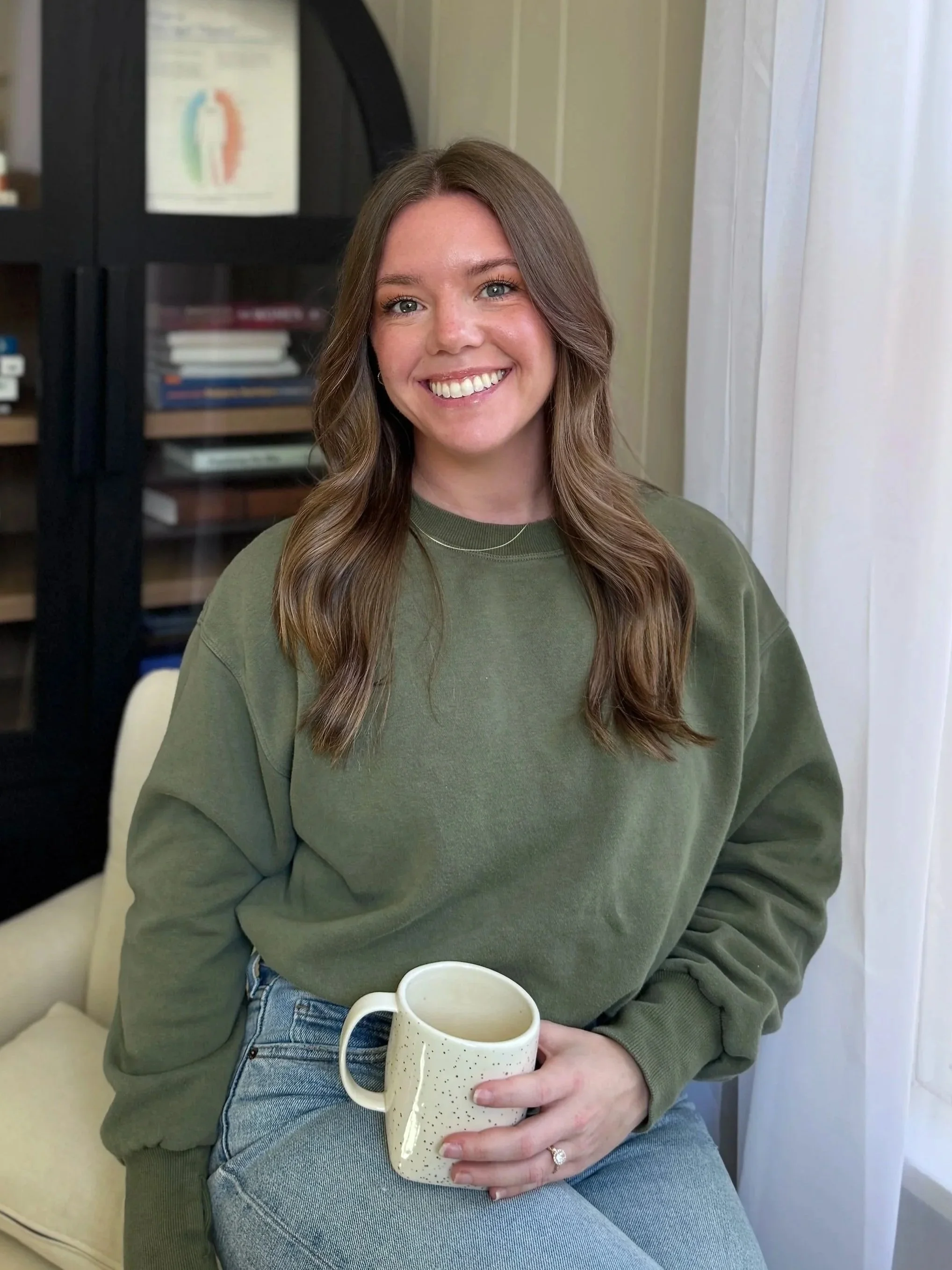
Our Supervising Dietitians
-
![Annie Goldsmith, RD is a trauma-informed dietitian in Charlotte NC providing clinical supervision for eating disorder professionals]()
Annie Goldsmith, RDN, LDN
-
![Ashley Roehrig RD, North Carolina eating disorder dietitian offering supervision and mentorship for dietitians in private practice]()
Ashley Roehrig, MS, RDN, LDN
-
![Hailee Willis, MS, RD, LDN, North Carolina eating disorder dietitian offering supervision for early-career dietitians in private practice]()
Hailee Willis, RDN, LDN
-
![Katie Schwartz, MS, RD, LDN, eating disorder dietitian offering clinical supervision for dietitians]()
Katie Schwartz, MS, RDN, LDN
-
![A woman with blonde hair wearing a dark green belted knit dress, sitting on the floor, smiling, with a laptop nearby, surrounded by large green houseplants in decorative pots.]()
Maureen Gately, MS, RDN, CEDS


Frequently Asked Questions
-
Supervision frequency depends on your needs and the structure you choose with your supervisor. Many clinicians meet weekly or biweekly, while others opt for monthly supervision as ongoing support. This can be adjusted over time as your clinical work and capacity change.
-
Most supervision sessions are 60 minutes. Session length and structure will be clearly outlined before you begin.
-
$175 per hour
-
Yes. Supervision can be especially helpful for dietitians who are newer to private practice and navigating the emotional, relational, and clinical complexity that comes with working independently. Supervision is adapted to your experience level and goals.
-
No. While many supervisees work in eating disorder care, supervision at SBN is also appropriate for dietitians working with disordered eating, chronic dieting, trauma-impacted relationships with food, or complex nutrition presentations. You do not need to exclusively identify as an eating disorder dietitian to benefit from supervision.
-
We encourage you to review each supervising dietitian’s bio to learn more about their clinical focus, approach, and areas of interest. Choosing a supervisor is about fit, and you’re welcome to reach out with questions before scheduling.
-
Supervision is not therapy, but it can be an important support for processing clinical stress, uncertainty, and the emotional weight of the work. Many clinicians use supervision to prevent isolation, reflect on challenging cases, and stay grounded and supported in their practice..
-
No prior training is required. Supervision is a space to learn, integrate, and ask questions at your own pace.